
Injury and Wound Healing

630nm Research
- 630 nm LED Boosts Tendon Cell Growth for Injury Healing
Lab tests on human tendon cells showed that 20 minutes of 630 nm LED light made the cells multiply faster and move better, which could help speed up recovery from tendon injuries like strains or tears by encouraging natural repair.
- 630 nm LED Speeds Healing in Diabetic Wound Model
In rats with wounds similar to diabetic foot ulcers, 630 nm LED light promoted faster healing by boosting cell growth, new blood vessels, collagen, and reducing inflammation, with big improvements seen in just 5-10 days.
- 630 nm LED Accelerates Wound Healing in Rats
Using a portable LED device at around 630 nm on cuts in rats for 30 minutes daily over 2 weeks, the stronger dose closed wounds faster, grew more collagen and blood vessels, making it a safe option for treating skin injuries.
HeroSeries panels and face masks use 630nm red light
660nm Research
- 660 nm LED Stimulates Cell Energy for Wound Healing
In skin cells essential for wound repair, 660 nm LED light created a lasting increase in energy production (ATP) over 24 hours, helping cells stay active and potentially accelerating the healing process by supporting better cellular function.
- 660 nm LED Promotes Diabetic Wound Cell Proliferation
Lab experiments demonstrated that 660 nm LED light enhanced the growth and migration of cells from diabetic wounds, activating key healing pathways to improve tissue repair and offering hope for faster recovery in diabetic patients.
- 660 nm LED Therapy Heals Cutaneous Wounds in Undernourished Rats
In rats with poor nutrition and skin wounds, treatment with 660 nm LED light (combined with NIR) promoted faster healing by enhancing cell growth, blood vessel formation, and collagen deposition, showing benefits for wound care in compromised health states.
HeroSeries panels, HeroBelt and HeroHat use 660nm red light
810nm Research
- 810 nm LED Promotes Diabetic Wound Healing in Cells and Mice
Lab tests on fibroblasts and experiments on type 2 diabetic mice showed 810 nm LED light (5 mW/cm2) helped cells grow and migrate and sped wound closure while raising VEGF and TGF growth factors, performing as well as 630 nm.
All HeroSeries panels use 810nm NIR light
830nm Research
- Review: LED and Laser Produce Similar Wound-Healing Effects
A review of 68 lab and animal studies found LED and laser light produce the same biological effects on wounds - fewer inflammatory cells, more fibroblasts, new blood vessels, granulation tissue and collagen - with the most-used wavelengths between 632.8 and 830 nm.
- 830 nm LED Low-Level Therapy Heals Various Wounds in Patients
In a preliminary study on patients with different wounds (like pressure ulcers and burns), 830 nm LED treatments achieved full healing, controlled infection and pain, with treatment times varying by wound condition, proving safe and effective for clinical use.
- Review: Near-Infrared 800-830 nm Is the Most Studied Range for Impaired Wounds
A review of red and near-infrared photobiomodulation for chronic wounds found the 800-830 nm range was the most effective and most widely studied, followed by red (630-680 nm) and 904 nm superpulsed light, acting through reduced inflammation and increased cell proliferation, collagen and blood vessels.
- 830 nm LED Applied Away From the Wound Still Sped Burn Healing
In a very small controlled study (2 mice and 3 rats), shining 830 nm LED on the abdomen of animals with laser burns on their backs led to faster burn healing than in untreated animals, suggesting a body-wide effect; larger studies are needed.
- 830 nm Laser Stimulates Diabetic Wound Fibroblasts
In cell models of normal, diabetic and hypoxic-diabetic wounds, a single 830 nm dose of 5 J/cm2 significantly increased fibroblast migration, viability and proliferation and raised TGF-beta1, with diabetic wounded cells closing the scratch fully by 72 hours. Laser study - a review found LED and laser produce similar biological effects.
- Review: 830 nm LED Speeds Recovery After Aesthetic Procedures
A review of clinical evidence concluded that applying 830 nm LED as soon as possible after invasive or non-invasive aesthetic procedures hastens resolution of redness, swelling and bruising and speeds frank wound healing, reducing downtime.
HeroSeries panels and face masks use 830nm NIR light
850nm Research
- Review: Photobiomodulation on Bone, Cartilage and Tendon Cells
A narrative review of connective-tissue studies across many wavelengths notes that 850 nm LED increased bone remodelling and osteoblast numbers after tooth extraction in rats and improved collagen type II and tissue organisation in osteoarthritic rat cartilage.
HeroSeries panels, HeroBelt and HeroHat use 850nm NIR light
Did you know red light therapy may support wound healing even when applied well after an injury has occurred? Research suggests it can help at multiple stages of the healing process - making it useful for both fresh injuries and ongoing recovery.³
Devices informed by injury & wound healing research³
-
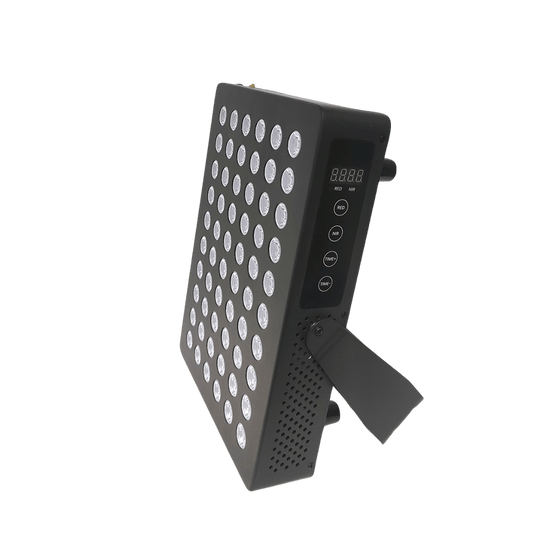
HeroPanels Elite™ 10 Wavelength Red Light Therapy Panel
Regular price $1,199.00 - $6,698.00 AUDRegular price$1,199.00 - $6,698.00 AUDSale price $1,199.00 - $6,698.00 AUD- 590-1072nm
- 3 sizes
- Lifetime Support
-
Hero60™ Tabletop Red Light Therapy Panel
Regular price $999.00 AUDRegular price- 630-850nm
- Fits most backpacks
- 3-Year Warranty
-
Hero300™ Red Light Therapy Panel
Regular price $2,199.00 - $2,848.00 AUDRegular price$2,199.00 - $2,848.00 AUDSale price $2,199.00 - $2,848.00 AUD- 630-850nm
- Half-body coverage
- 3-Year Warranty
-
Hero960™ Red Light Therapy Panel
Regular price $4,999.00 - $5,698.00 AUDRegular price$4,999.00 - $5,698.00 AUDSale price $4,999.00 - $5,698.00 AUD- 630-850nm
- Full-body coverage
- 3-Year Warranty



Other red light therapy research
- Sleep quality
- Pain and inflammation
- Muscle mass and recovery
- Collagen production, skin and wrinkles
- Hair growth
- Neural function, depression and brain diseases
- ATP production and mitochondria function
- Eyesight
See the studies for yourself by clicking the links above or visit our RLT Wavelength Research page for an overview.