
ATP Production and Mitochondria Function

630nm Research
- 630 nm LED (with 850 nm) Boosts ATP and Mitochondrial Potential in Muscle Cells
In a study on mouse muscle cells, treatment with 630 nm red LED light (combined with near-infrared) increased energy production (ATP) up to 3.5 times and improved mitochondrial health (membrane potential) peaking 3-6 hours later, helping cells generate more power efficiently.
- 630 nm LED Enhances ATP Synthesis and Mitochondrial Function in Heart Cells
Researchers found that shining 630 nm red LED light on heart muscle cells ramped up ATP production by activating key enzymes, raised mitochondrial energy levels and structure, and handled stress better without harm, potentially aiding heart health.
- 620-630 nm LED Improves Mitochondrial Activity in Sperm Cells
Exposing donkey sperm to 620-630 nm red LED light boosted mitochondrial membrane potential, enzyme activity, and oxygen use - which supports ATP creation - with the best results depending on exposure time, suggesting benefits for cellular energy.
- Review: NASA near-infrared LED arrays (630-1000 nm) act through cytochrome c oxidase to speed wound and retinal healing
This 2004 review from the NASA LED research group summarises evidence that red-to-near-infrared LED light (630-1000 nm) is absorbed by cytochrome c oxidase, increases the enzyme in cultured neurons, up-regulates wound-healing genes in diabetic mice and helps retinal cells survive toxic injury. (Review article, not a single experiment.)
HeroSeries panels and face masks use 630nm red light
660nm Research
- 660 nm LED increases mitochondrial activity up to 72% in stem cells from knee cartilage
In a lab study on meniscus stem cells from six osteoarthritis patients, 660 nm LED light (about 2-14 minutes, 4-30 J/cm²) raised mitochondrial enzyme activity (MTT) by 17-72% four hours after treatment at the 18 J/cm² dose, with the effect fading by 24 hours, and improved cell proliferation over three passages. ATP was not measured directly.
- 660 nm LED protects hippocampal brain cells from oxidative stress and boosts antioxidant enzymes
In mouse hippocampal cells and brain-slice cultures stressed with hydrogen peroxide, 660 nm LED light (3 J/cm²) improved cell survival by up to about 16%, increased antioxidant enzymes (SOD1, glutathione peroxidase and reductase) and roughly doubled BDNF, a nerve growth factor. ATP was not measured, so this shows protection of the cell's redox balance rather than a direct energy boost.
HeroSeries panels, HeroBelt and HeroHat use 660nm red light
810nm Research
- 810 nm LED Boosts Mitochondrial Redox and ATP Production In Vivo
In a study on human forearms, 810 nm LED light significantly increased oxidized cytochrome c oxidase and oxygenated hemoglobin, enhancing mitochondrial redox activity and potentially increasing ATP through improved oxidative phosphorylation, as a safer alternative to lasers.
- 810 nm light increases ATP synthesis and oxygen use in mouse brain nerve terminals without oxidative damage
In isolated nerve terminals (synaptosomes) from mouse cortex, a 60-second 810 nm exposure increased oxidative phosphorylation and ATP synthesis in a power-dependent way (about 46% at 1 W, 15% at 0.1 W) while keeping mitochondrial coupling intact and without raising oxidative-stress markers, and partly normalised glutamate release when complex I was blocked by rotenone. While this study used lasers, other studies show "LED light can be as effective as LASER, since both have similar biological effects, with no significant difference between them".
All HeroSeries panels use 810nm NIR light
830nm Research
- 830 nm LED preserves the mitochondrial redox state and protects photoreceptors in a rat model of retinitis pigmentosa
In P23H rats, 3 minutes of 830 nm LED light (4.5 J/cm²) daily from day 10 to 25 restored the retina's NADH/FAD redox ratio to normal and significantly preserved photoreceptor numbers and outer-retina thickness; the benefit faded once treatment stopped, and ATP itself was not measured.
HeroSeries panels and face masks use 830nm NIR light
850nm Research
- 850 nm LED Increases Mitochondrial Potential and ATP in Muscle Cells
In a lab study on mouse muscle cells, a device with 850 nm near-infrared LEDs (and some red) shone for 90 seconds boosted the cells' energy factories (mitochondria) and ATP levels, peaking at 3-6 hours after treatment, which could help muscles work better and recover faster.
- Near-infrared LED (700 + 850 + 980 nm) changes mitochondrial respiration and bone genes in osteoblasts - dose and timing matter
In human bone-forming cells treated daily with a three-wavelength LED (700, 850 and 980 nm together), five days at the higher dose (10.6 J/cm²) increased maximal mitochondrial respiration and bone-formation genes rose over 3-5 days, but five days at the lower dose reduced maximal respiration and seven days suppressed basal respiration, showing that more treatment is not always better. The wavelengths were delivered simultaneously so the 850 nm contribution cannot be separated.
- 15 minutes of 850 nm LED on the back improves colour vision a day later, even with the eyes shielded
In 25 adults, 15 minutes under an 850 nm LED panel on the bare back improved blue-yellow colour-contrast thresholds by 16% at 24 hours (9% for red-green), and by 7% in a group whose heads were wrapped in foil so no light reached the eyes; sham exposure had no effect. The authors interpret this as a body-wide mitochondrial effect, but mitochondrial function or ATP was not measured directly.
HeroSeries panels, HeroBelt and HeroHat use 850nm NIR light
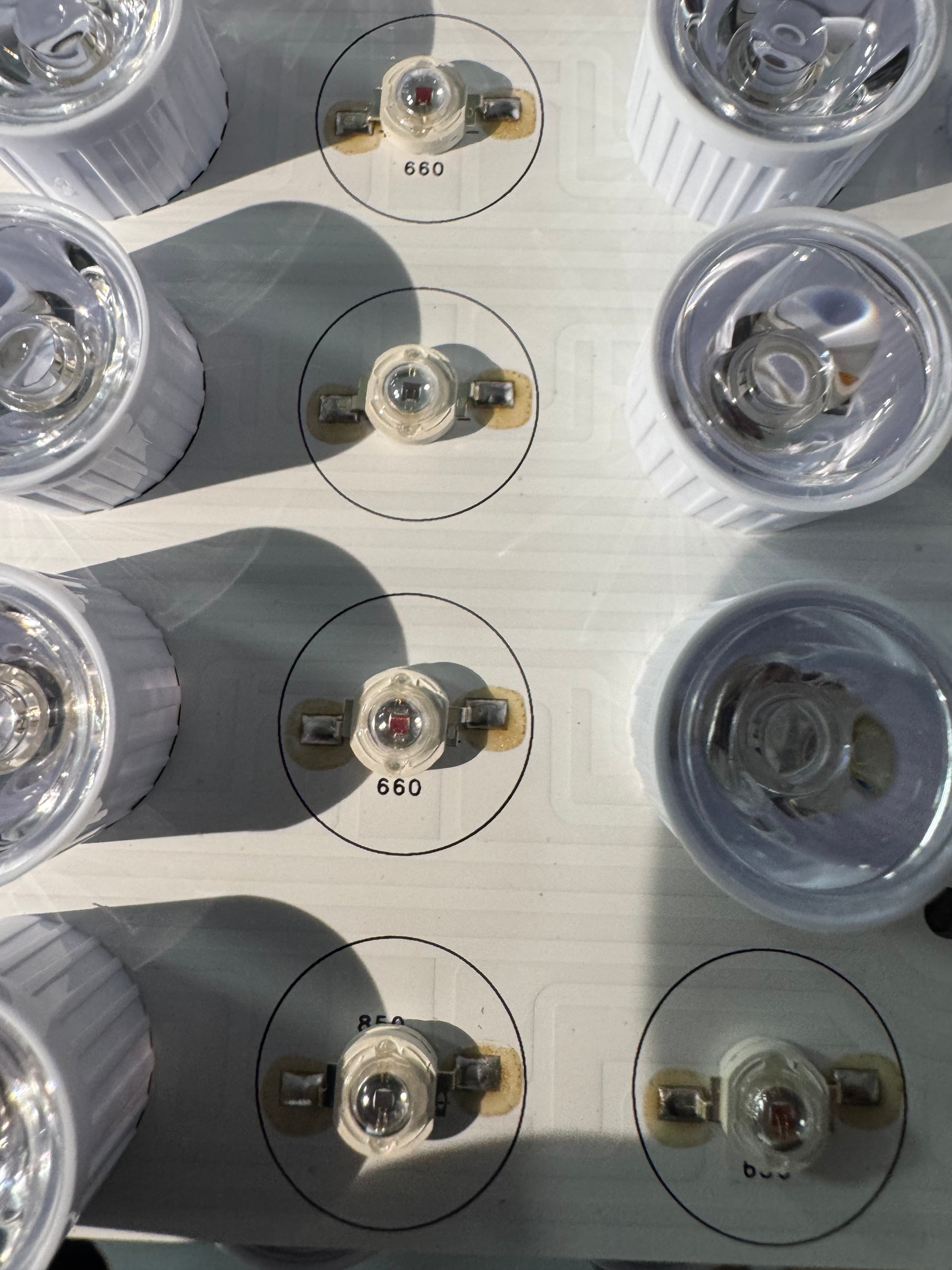
Did you know near-infrared (NIR) light is beyond our vision range? That’s why you won’t see our 810nm, 830nm, and 850nm LEDs - even though they’re working just as powerfully as the visible 630nm and 660nm ones.
Devices informed by ATP production and mitochondria function research³
-
HeroPanels Elite™ 10 Wavelength Red Light Therapy Panel
Regular price $1,199.00 - $6,698.00 AUDRegular price$1,199.00 - $6,698.00 AUDSale price $1,199.00 - $6,698.00 AUD -
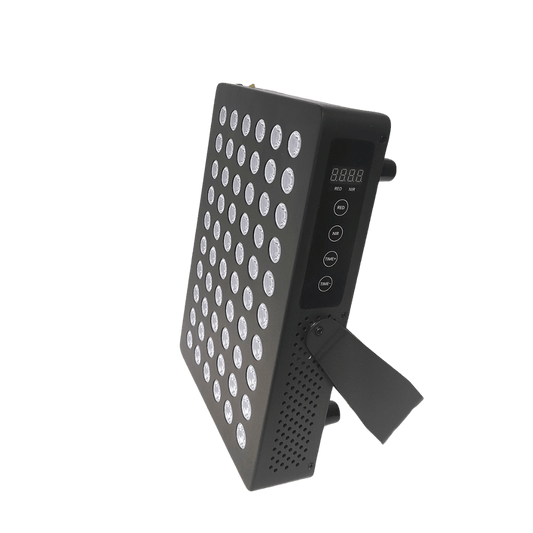
Hero60™ Tabletop Red Light Therapy Panel
Regular price $999.00 AUDRegular price -
Hero300™ Red Light Therapy Panel
Regular price $2,199.00 - $2,848.00 AUDRegular price$2,199.00 - $2,848.00 AUDSale price $2,199.00 - $2,848.00 AUD -
Hero960™ Red Light Therapy Panel
Regular price $4,999.00 - $5,698.00 AUDRegular price$4,999.00 - $5,698.00 AUDSale price $4,999.00 - $5,698.00 AUD



Other red light therapy research
- Sleep quality
- Pain and inflammation
- Muscle mass and recovery
- Collagen production, skin and wrinkles
- Hair growth
- Neural function, depression and brain diseases
- Injuries and wounds
- Eyesight
See the studies for yourself by clicking the links above or visit our RLT Wavelength Research page for an overview.